
Living with high cholesterol or raised cardiovascular risk often means a long-term relationship with statins. Many people tell me:
“My cholesterol looks better on paper, yet I feel more tired, my muscles ache, and I worry that my body is missing something.”
At my functional medicine clinic (DrStavy.com) I help patients across London and the rest of the UK (via telemedicine) to stay protected from heart disease while also feeling well day-to-day. A key part of that work is checking how statins interact with nutrients, mitochondria and metabolic pathways.
This article walks through the main nutrients that tend to fall with statin therapy, how strong the evidence is for each one, and how I build a plan around diet, testing and, when appropriate, supplements.
What statins actually do inside the body
Statins (HMG-CoA reductase inhibitors) block the enzyme HMG-CoA reductase, a key control point in the “mevalonate pathway”, the biochemical route the liver uses to make cholesterol.
When this enzyme is blocked:
The liver makes less cholesterol.
LDL receptors on liver cells increase, so more LDL-cholesterol is cleared from the blood.
Downstream products of the same pathway fall as well – not only cholesterol, but also coenzyme Q10 (CoQ10), dolichols, prenylated proteins and other isoprenoids.
That last bullet is the bridge between statins and nutrient depletion. Statins do not just “target cholesterol”; they influence multiple molecules that cells use for energy production, antioxidant defence and tissue repair.
How a cholesterol drug can influence nutrient status
Two broad mechanisms show up repeatedly in the research:
Blocking endogenous synthesis
CoQ10 is made in the same pathway as cholesterol. When statins slow that pathway, CoQ10 production drops as well.
Changing transport, activation or use of nutrients
Statins interact with vitamin D metabolism and absorption. Some trials show higher blood vitamin D on statins, while observational work links low vitamin D with statin-associated muscle symptoms.
Experimental research suggests that statins interfere with vitamin-K–dependent proteins and selenoproteins involved in antioxidant defence and vascular health.
In functional medicine I treat statins as one piece of a wider cardiometabolic picture: medication, nutrient status, mitochondrial energy production, inflammation, and lifestyle all sit in the same network.
Coenzyme Q10 – the classic statin-related deficiency
Why CoQ10 matters
CoQ10 sits in every mitochondrial membrane and helps shuttle electrons along the respiratory chain so that cells can make ATP. It also works as a lipid-soluble antioxidant in membranes and lipoproteins.
Low CoQ10 links with:
Fatigue and exercise intolerance
Muscle weakness and myalgia
Worsening heart failure in susceptible patients
What statins do to CoQ10
Multiple animal and human studies report lower plasma and tissue CoQ10 in people taking statins, especially higher doses and more lipophilic drugs.
Examples:
A JAMA Neurology study showed that atorvastatin reduced plasma CoQ10 levels in treated patients.
Langsjoen and colleagues summarised consistent CoQ10 depletion with statins in both animal models and humans, with cardiac consequences in vulnerable groups.PubMed
StatPearls and other reviews explicitly list decreased CoQ10 as a contributor to statin-related musculoskeletal toxicity.
In practice this does not mean every statin user becomes CoQ10-deficient, yet the direction of change in levels is clear.
CoQ10, muscle symptoms and mitochondria
Muscle symptoms (SAMS – statin-associated muscle symptoms) feel very real for patients, even though large trials suggest that only a smaller fraction of muscle pain in statin users is directly caused by the drug.
Several studies looked at whether statin-related muscle pain runs alongside mitochondrial changes and CoQ10 levels:
A 2019 study found reduced mitochondrial respiration in statin-treated muscle, especially complex II-linked respiration, with associations to myalgia.
Animal work shows that adding CoQ10 can reverse statin-related mitochondrial dysfunction and improve oxygen utilisation.
Does CoQ10 supplementation help?
This question often comes up in clinic. The answer from the literature is mixed, so I discuss it transparently with patients:
Some randomised trials and observational series report improvement in muscle pain and quality of life with CoQ10, often at doses between 100–300 mg per day.
Several meta-analyses and critical reviews find no consistent benefit for muscle pain reduction when results are pooled.
An NHS prescribing support document and BMJ Drug and Therapeutics Bulletin article both conclude that current evidence does not justify routine CoQ10 for every patient with statin-related muscle problems.
How I use this information in practice
In my clinic I usually:
Check symptom pattern carefully – generalised aches, fatigue, exercise intolerance, sleep, mood and co-existing conditions such as hypothyroidism or low iron.
Address obvious contributors first – thyroid, iron, vitamin D, magnesium, hydration, training load, alcohol, drug interactions.
Discuss CoQ10 as a trial in selected patients with clear muscle symptoms where standard medical adjustments have not helped and cardiovascular risk remains high enough that continuation of statin therapy matters.
I frame CoQ10 as an adjunct, not a replacement for core risk-reduction strategies that follow NICE CVD guidelines.
Vitamin D – low levels, muscle pain and statins
Vitamin D’s role in muscle and metabolic health
Vitamin D receptors sit in muscle cells, immune cells, pancreatic beta cells and many other tissues. Low 25-hydroxyvitamin D links with:
Myopathy and muscle weakness
Fracture risk and low bone mineral density
Higher cardiometabolic risk in observational cohorts
In the UK, vitamin D deficiency is extremely common through autumn and winter. National guidance suggests supplements for many adults, especially between October and March.
Low vitamin D and statin-associated muscle symptoms
Several studies connect low vitamin D status with statin muscle problems:
A 2019 case–control study found a strong association between deficient/insufficient vitamin D and SAMS.
Observational work in statin-intolerant patients reports that repleting vitamin D often allows re-challenge with statins at better tolerated doses.
Clinical commentaries from lipid specialists highlight vitamin D deficiency as a common, treatable contributor to “statin myalgia” presentations.
Do statins lower vitamin D levels?
This is where nuance matters. Mechanistic worries once suggested that blocking cholesterol synthesis could worsen vitamin D status, since skin uses cholesterol precursors to make vitamin D3. Newer research paints a different picture:
Several trials and reviews report higher 25-hydroxyvitamin D levels in patients on statins, possibly through improved absorption or reduced catabolism via CYP3A4.
A 2025 review of statins and vitamin D concluded that serum vitamin D is usually neutral or modestly higher on statin therapy, with potential synergy for endothelial and anti-inflammatory effects.
So statins do not reliably “cause” vitamin D deficiency. What I see instead is that pre-existing low vitamin D often surfaces when a patient starts a statin and then develops muscle complaints.
How I handle vitamin D in statin users
My usual approach:
Measure 25-hydroxyvitamin D as part of a broader work-up in symptomatic patients or those with high risk of deficiency (limited sun exposure, darker skin, older age, higher BMI, malabsorption).
Bring levels into an evidence-based target range with oral vitamin D3, following UK guidance on dosing and safety
Re-evaluate muscle symptoms once vitamin D status has improved, in collaboration with the prescribing GP or cardiologist.
Vitamin K2 and vitamin-K–dependent proteins
Why K2 matters for arteries and bones
Vitamin K activates several Gla-proteins, including:
Matrix Gla Protein (MGP) – inhibits vascular calcification
Osteocalcin – links bone mineralisation with calcium handling
Without enough activated vitamin-K–dependent proteins, calcium drifts into vessel walls and soft tissues instead of staying in bone.
Statins and vitamin K biology
Several mechanistic and clinical papers suggest an interaction between statins and vitamin-K–related pathways:
Okuyama and colleagues proposed that statins inhibit vitamin K2 synthesis and selenoprotein production, contributing to arterial calcification and heart failure risk.
A 2021 review on statins, vascular calcification and vitamin-K–dependent proteins suggested that statins enhance pro-calcific processes in part through less effective vitamin-K–dependent inhibition of calcification.
Industry-sponsored work with menaquinone-7 (MK-7) highlighted interference of statins with vitamin K2’s cardio-protective actions, although these findings sit in early phases and need independent replication.
Not all analyses agree. One recent technical review argued that statins do not directly block conversion of vitamin K3 to K2, and that the main effects might run through adjacent pathways rather than absolute K2 depletion.
How I translate this into clinical care
The evidence for vitamin K2 depletion from statins is less solid than for CoQ10, yet the vascular calcification question matters. In practice I:
Assess overall calcification risk through lipid profile, glucose metabolism, kidney function, family history and, where appropriate, imaging requested via regular NHS routes.
Encourage K-rich foods: leafy greens (vitamin K1) and fermented foods or certain cheeses that contain K2.
Explore K2 supplementation only after reviewing medications (including anticoagulants such as warfarin, which interact strongly with vitamin K).
Selenium and mitochondrial antioxidant defence
Selenium forms the active centre of several antioxidant enzymes, most notably glutathione peroxidases and thioredoxin reductases. These protect mitochondrial membranes and cardiomyocytes from oxidative stress.
A widely discussed paper by Okuyama and others argued that statins impair the synthesis of selenoproteins and CoQ10 together, proposing that this pattern contributes to heart failure and skeletal muscle problems.
Large outcome trials have not yet placed selenium depletion at the centre of statin risk–benefit analysis, yet in functional medicine I still pay attention to:
Dietary selenium intake (Brazil nuts, seafood, eggs)
Signs of oxidative stress and poor recovery in higher-risk patients
When I see chronically low selenium on blood work plus symptoms and clear dietary insufficiency, I correct the diet first and only add supplements within an individualised plan.
Other nutrients and metabolites often discussed
A few other molecules sit in the “statins and nutrients” conversation, though evidence is more speculative.
Carnitine and fatty-acid handling
L-carnitine shuttles long-chain fatty acids into mitochondria. Some functional medicine sources suggest that statins disturb carnitine metabolism and long-chain fatty acid oxidation, yet solid human data here remains limited. No major cardiology or lipid guidelines currently recommend routine carnitine testing or supplementation purely for statin users.
Heme A and respiratory chain complexes
The mevalonate pathway supports synthesis of heme A, a component of complex IV (cytochrome c oxidase). Experimental work indicates that statins disturb mitochondrial complexes, although this sits mainly in mechanistic studies rather than patient-level trial
In clinic I treat these hypotheses as prompts to focus on whole-mitochondrial support – sleep, nutrient-dense diet, physical activity matched to capacity, and careful review of polypharmacy – rather than chasing every possible supplement.
How I assess nutrient status in patients who take statins
When someone on a statin comes to see me, the first step is a detailed story rather than a supplement list. I want to know:
Exact statin drug, dose and schedule, including changes over time
Cardiovascular risk profile and indications based on NICE guidance (primary or secondary prevention, familial hypercholesterolaemia, diabetes, etc.)
Muscle symptoms: location, timing, relation to exercise, past injuries, thyroid or rheumatological diagnoses
Energy levels, sleep, mood, cognitive changes
Diet pattern, alcohol intake, weight history, physical activity
Core investigations
I then build a lab panel that often includes:
Lipid profile – total cholesterol, HDL, triglycerides, non-HDL, ApoB where accessible
Glucose metabolism – fasting glucose, HbA1c, insulin where suitable
Inflammation markers – hs-CRP, fibrinogen in selected cases
Thyroid profile, full blood count, iron status
25-hydroxyvitamin D – especially in those with muscle pain, low sun exposure or higher risk groups
Creatine kinase and liver enzymes in line with standard statin monitoring guidance
CoQ10 testing exists but is not widely available in routine NHS settings, and interpretation is complex. I treat it as an adjunct rather than a core test.
Food-first strategies while you stay on statins
Supplements sit on top of diet, not the other way round. For people on statins I usually aim for a Mediterranean-style pattern rich in:
CoQ10-rich foods
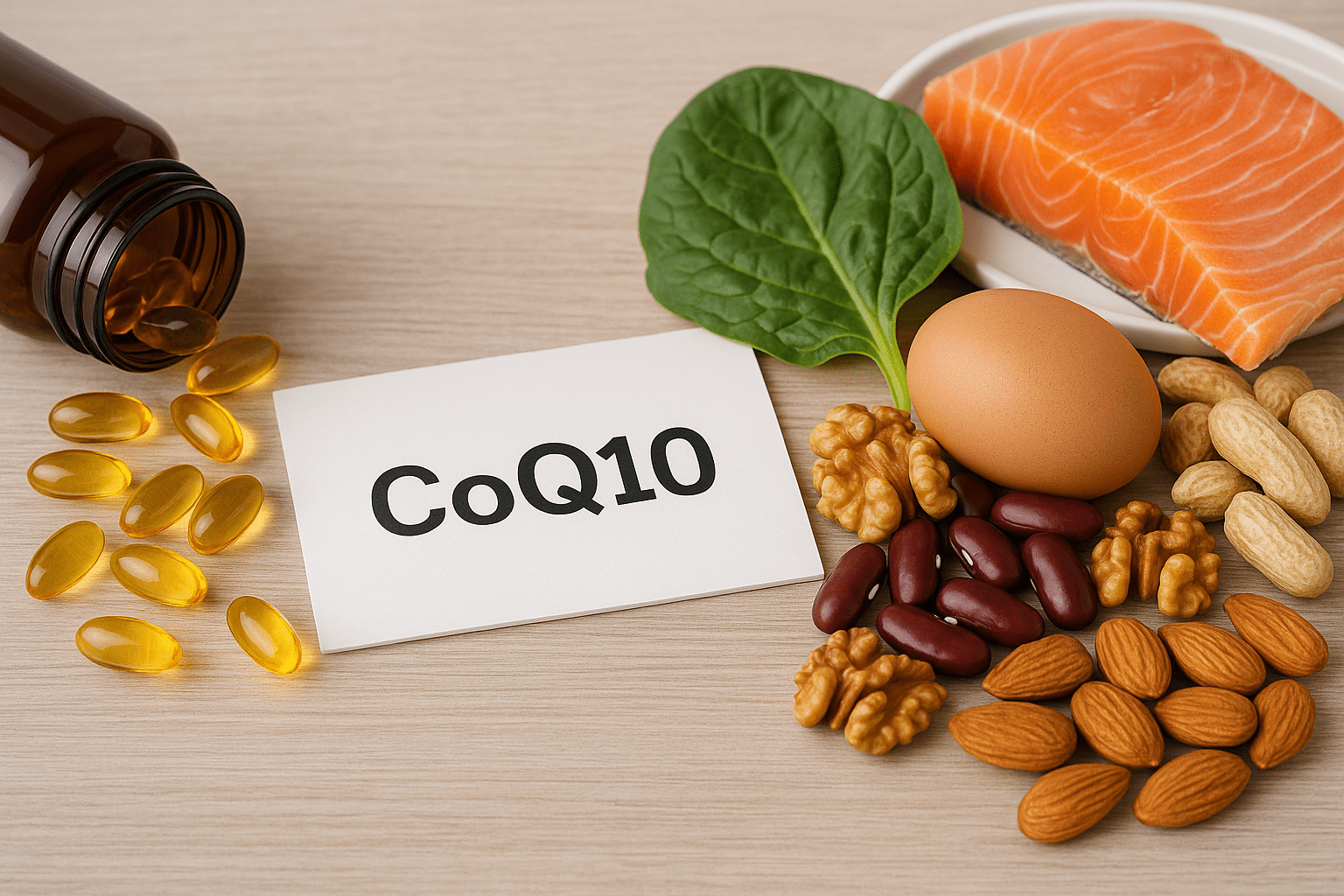
Organ meats (heart, liver), oily fish (sardines, mackerel), beef, soy, peanuts.
Vitamin D sources
Oily fish, eggs, fortified foods, and sensible sun exposure according to skin type and season.
Vitamin K2 foods
Fermented foods such as natto (where culturally acceptable), certain aged cheeses, and some fermented vegetables.
Selenium sources
Brazil nuts, seafood, eggs, whole grains.
Magnesium and B-vitamin-dense foods
Green leafy vegetables, legumes, nuts, seeds, whole grains, which support energy production and nerve function.
Alongside this, I work on protein intake, glycaemic control, fibre, and alcohol moderation, all of which influence both cardiovascular risk and subjective energy.
When supplements enter the plan
CoQ10
When I and the prescribing clinician agree that a statin should continue and the patient still struggles with muscle or energy symptoms after basic causes have been corrected, I sometimes suggest a monitored CoQ10 trial.
Key points I take into account:
Typical studied doses sit between 100–300 mg per day, often in divided doses and taken with meals that contain fat.
Evidence for symptom relief is mixed, so I set clear expectations and time-frames for reassessment
Current NHS and NICE materials do not recommend routine CoQ10, so this sits as a personalised add-on rather than standard of care.
Vitamin D
For vitamin D I follow UK guidance closely:
Target 25-hydroxyvitamin D levels in the sufficient range.
Use daily or weekly supplements, adjusting for body weight, malabsorption and co-existing conditions.
Re-test after several months, especially in patients with SAMS or bone health concerns
Vitamin K2 and selenium
For K2 and selenium I usually:
Strengthen food sources first.
Explore supplements cautiously in patients with low dietary intake, higher vascular calcification risk, or concurrent osteoporosis, again with an eye on medication interactions.
How my clinic integrates medication and functional nutrition
Statins save lives when used in the right person, at the right dose, in the right context, in line with NICE and international cardiovascular guidelines.
My role as a functional and longevity doctor is to:
Keep that risk-reduction benefit in place where appropriate.
Map out nutrient status, mitochondrial health and lifestyle factors that influence how you feel on treatment.
Use nutrition, intelligent supplementation and behaviour change to make the whole system work more smoothly.
I work closely with GPs, cardiologists and lipid clinics, sharing reports and blood results so that everyone stays aligned on your treatment plan and no drug interactions slip through. Telemedicine visits allow me to support patients across the UK who already have a prescribing clinician in place for statins and other cardiometabolic drugs.
If you are on a statin and recognise yourself in the picture of fatigue, muscle pain or worry about nutrient depletion, a structured review of your nutrient status, symptoms and cardiovascular risk can change the experience of treatment. A single drug should not define your health story; it sits inside a wider network that we can rebalance together.
References:
Banach M, Serban C, Ursoniu S, et al. Statin therapy and plasma coenzyme Q10 concentrations: a systematic review and meta-analysis of placebo-controlled trials. Pharmacological Research. 2015;99:329–336.
Qu H, Guo M, Chai H, Wang W, Gao Z, Shi D. Effects of coenzyme Q10 on statin-induced myopathy: an updated meta-analysis of randomized controlled trials. Journal of the American Heart Association. 2018;7(19):e009835.
Ahmad K, Manongi NJ, Rajapandian R, et al. Effectiveness of coenzyme Q10 supplementation in statin-induced myopathy: a systematic review. Cureus. 2024;16(8):e68316.
Kennedy C, Köller Y, Surkova E. Effect of coenzyme Q10 on statin-associated myalgia and adherence to statin therapy: a systematic review and meta-analysis. Atherosclerosis. 2020;299:1–8.
Stroes ES, Thompson PD, Corsini A, et al. Statin-associated muscle symptoms: impact on statin therapy—European Atherosclerosis Society Consensus Panel statement on assessment, aetiology and management. European Heart Journal. 2015;36(17):1012–1022.
Okuyama H, Langsjoen PH, Hamazaki T, et al. Statins stimulate atherosclerosis and heart failure: pharmacological mechanisms. Expert Review of Clinical Pharmacology. 2015;8(2):189–199.
Zhelyazkova-Savova MD, Yotov YT, Nikolova MN, et al. Statins, vascular calcification and vitamin K-dependent proteins: is there a relation? Kaohsiung Journal of Medical Sciences. 2021;37(7):624–631.
Hariri E, Kassis N, Iskandar JP, et al. Vitamin K2—a neglected player in cardiovascular health: a narrative review. Open Heart. 2021;8(2):e001715.
Wei F-F, Trenson S, Verhamme P, Vermeer C, Staessen JA. Vitamin K-dependent matrix Gla protein as multifaceted protector of vascular and tissue integrity. Hypertension. 2019;73(6):1160–1169.
Roumeliotis S, Dounousi E, Eleftheriadis T, Liakopoulos V. Association of the inactive circulating matrix Gla protein with vascular calcification, mortality and cardiovascular disease: a systematic review. International Journal of Molecular Sciences. 2019;20(3):628.
Sahebkar A, Reiner Ž, Simental-Mendía LE, Ferretti G, Della Corte C, Nobili V. Impact of statin therapy on plasma vitamin D levels: a systematic review and meta-analysis. Current Pharmaceutical Design. 2017;23(6):861–869.
Scientific Advisory Committee on Nutrition. Vitamin D and Health. London: UK Government; 2016.
Public Health England. PHE Publishes New Advice on Vitamin D. London: PHE; 2016.
National Institute for Health and Care Excellence. Cardiovascular Disease: Risk Assessment and Reduction, Including Lipid Modification (NG238). London: NICE; 2023.
Mach F, Baigent C, Catapano AL, et al. 2019 ESC/EAS Guidelines for the management of dyslipidaemias: lipid modification to reduce cardiovascular risk. European Heart Journal. 2020;41(1):111–188.
NHS England, Accelerated Access Collaborative. Summary of National Guidance for Lipid Management. London: NHS England; first published 2020, updated 2024.
Here’s a cleaned-up reference list you can paste straight into the article (no PubMed-style tags or database notes):
Banach M, Serban C, Ursoniu S, et al. Statin therapy and plasma coenzyme Q10 concentrations: a systematic review and meta-analysis of placebo-controlled trials. Pharmacological Research. 2015;99:329–336.
Qu H, Guo M, Chai H, Wang W, Gao Z, Shi D. Effects of coenzyme Q10 on statin-induced myopathy: an updated meta-analysis of randomized controlled trials. Journal of the American Heart Association. 2018;7(19):e009835.
Ahmad K, Manongi NJ, Rajapandian R, et al. Effectiveness of coenzyme Q10 supplementation in statin-induced myopathy: a systematic review. Cureus. 2024;16(8):e68316.
Kennedy C, Köller Y, Surkova E. Effect of coenzyme Q10 on statin-associated myalgia and adherence to statin therapy: a systematic review and meta-analysis. Atherosclerosis. 2020;299:1–8.
Stroes ES, Thompson PD, Corsini A, et al. Statin-associated muscle symptoms: impact on statin therapy—European Atherosclerosis Society Consensus Panel statement on assessment, aetiology and management. European Heart Journal. 2015;36(17):1012–1022.
Okuyama H, Langsjoen PH, Hamazaki T, et al. Statins stimulate atherosclerosis and heart failure: pharmacological mechanisms. Expert Review of Clinical Pharmacology. 2015;8(2):189–199.
Zhelyazkova-Savova MD, Yotov YT, Nikolova MN, et al. Statins, vascular calcification and vitamin K-dependent proteins: is there a relation? Kaohsiung Journal of Medical Sciences. 2021;37(7):624–631.
Hariri E, Kassis N, Iskandar JP, et al. Vitamin K2—a neglected player in cardiovascular health: a narrative review. Open Heart. 2021;8(2):e001715.
Wei F-F, Trenson S, Verhamme P, Vermeer C, Staessen JA. Vitamin K-dependent matrix Gla protein as multifaceted protector of vascular and tissue integrity. Hypertension. 2019;73(6):1160–1169.
Roumeliotis S, Dounousi E, Eleftheriadis T, Liakopoulos V. Association of the inactive circulating matrix Gla protein with vascular calcification, mortality and cardiovascular disease: a systematic review. International Journal of Molecular Sciences. 2019;20(3):628.
Sahebkar A, Reiner Ž, Simental-Mendía LE, Ferretti G, Della Corte C, Nobili V. Impact of statin therapy on plasma vitamin D levels: a systematic review and meta-analysis. Current Pharmaceutical Design. 2017;23(6):861–869.
Scientific Advisory Committee on Nutrition. Vitamin D and Health. London: UK Government; 2016.
Public Health England. PHE Publishes New Advice on Vitamin D. London: PHE; 2016.
National Institute for Health and Care Excellence. Cardiovascular Disease: Risk Assessment and Reduction, Including Lipid Modification (NG238). London: NICE; 2023.
Mach F, Baigent C, Catapano AL, et al. 2019 ESC/EAS Guidelines for the management of dyslipidaemias: lipid modification to reduce cardiovascular risk. European Heart Journal. 2020;41(1):111–188.
NHS England, Accelerated Access Collaborative. Summary of National Guidance for Lipid Management. London: NHS England; first published 2020, updated 2024.